A flooded basement doesn't wait for business hours, and neither do we. Aqua Guard Water Damage keeps trucks staged around Kansas so a licensed technician can be pulling standing water within the hour, not scheduling you for next Tuesday.
Call +1-844-234-5373 Now
Aqua Guard Water Damage built its Kansas operation around one standard: arrive fast, document everything with moisture readings and thermal imaging, and communicate the drying plan in plain language before we touch a single wall.
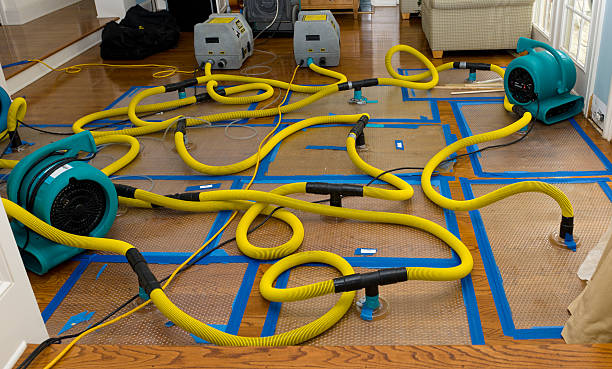
Every technician on our Kansas roster is background-checked, licensed, and insured, and every truck is stocked with commercial-grade air movers, low-grain-refrigerant dehumidifiers, and antimicrobial treatment for contaminated water intrusion.
We invest in ongoing training as drying standards and equipment evolve, rather than treating a technician's initial certification as the finish line.

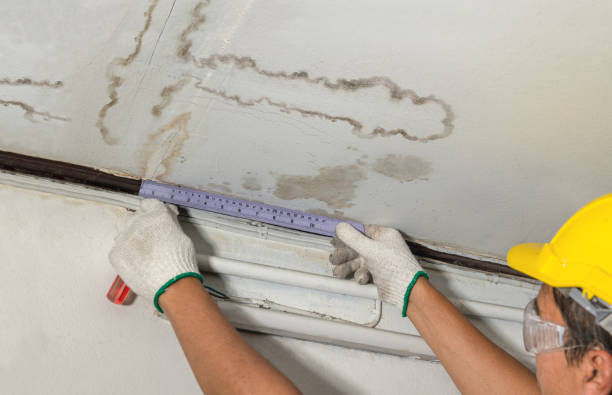
A stain that keeps reappearing after you paint over it is a signal, not a coincidence — the moisture source behind the wall hasn't been addressed and needs a moisture meter reading, not a fresh coat of paint. Repainting without finding the source just hides the problem for a few more weeks.
If opening windows and running a fan doesn't clear the smell within a day, the moisture source is still active and needs professional extraction, not just ventilation. A smell that returns after cleaning is a strong sign the moisture is still present.
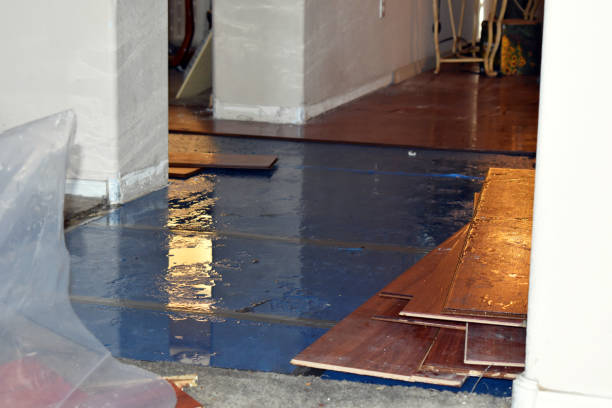
Hardwood that's cupping at the edges or laminate that's separating at the seams is a classic sign of moisture intrusion from below, whether that's a slab leak or groundwater seepage. The longer it sits, the harder the flooring is to salvage.
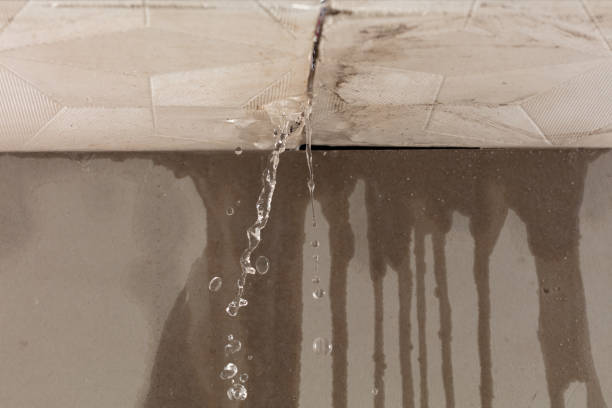
An unexplained jump in your water bill is frequently the first sign of a slab leak or a failing supply line long before any visible water appears. Catching it at this stage is far cheaper than waiting for a visible flood.
Bubbling near a window or exterior wall frequently points to a flashing or seal failure letting water into the wall cavity a little at a time.
Mold that returns after cleaning with bleach is a sign the underlying moisture source was never addressed, since surface cleaning does nothing for saturated material behind the wall.
We treat Structural Drying as one continuous job rather than a series of handoffs — the crew that extracts the water is accountable for the drying results, and the drying results determine what reconstruction is actually needed.
Standing water gets removed with commercial extraction equipment first, then we run moisture readings across every affected surface so the drying plan targets what's actually still wet, not what looks dry on the surface.
Drying logs track humidity, surface moisture, and airflow at every checkpoint, so you get documented proof the structure is dry before we close out the job — useful for your insurance claim too.
Our sewage cleanup protocol follows IICRC S500 contamination standards, isolating the affected area, removing unsalvageable materials, and disinfecting every surface that had contact with blackwater.
Because mold can establish in as little as 48 hours, our drying timeline is built around beating that window rather than treating mold prevention as an afterthought.
We handle everything from replacing water-damaged drywall and insulation to refinishing floors, so the property is restored to pre-loss condition under one contract instead of three.
Furniture, documents, and electronics affected by water intrusion get assessed on-site, with salvageable items cleaned and stored while unsalvageable items are documented for your claim.


You call +1-844-234-5373 and speak with a live dispatcher, not a voicemail system — we ask a few quick questions about the source and severity so the crew arrives prepared.
We document the loss with photos and moisture readings before touching anything, which also protects your insurance claim.
We set drying equipment based on the specific moisture readings taken during assessment, not a generic placement pattern.
We re-test every affected area before calling a job complete, then coordinate repairs so you're not left with an open punch list.
Every technician carries IICRC certification and our crews are fully insured for your protection on every job.
Local staging means shorter drive times, which matters most in the first hour after a water loss.
We'd rather explain the cost clearly upfront than have that conversation after the job is already underway.
If a drying target isn't met on the first pass, we extend equipment placement at no extra charge until moisture readings confirm the structure is dry.
Every job closes with documented moisture verification, because a guarantee that isn't backed by data isn't much of a guarantee.
Our technicians don't get paid faster by closing jobs early, which keeps the incentive aligned with actually finishing the drying properly.
Call +1-844-234-5373Our Kansas coverage area spans 44841, with trucks positioned to reach any address in the service radius quickly.
Coverage isn't limited to the city center — our Kansas routes extend out to the surrounding suburbs so outlying addresses aren't treated as an afterthought.

"A pipe burst behind our water heater and the crew here in Kansas had extraction units running within 40 minutes of my call. They walked me through the moisture readings every day until it was fully dry."
James R., Kansas"They caught mold starting behind our drywall before it spread and contained it properly instead of just painting over the problem like a previous contractor did."
Denise M., Kansas"They didn't cut corners on the contaminated water cleanup even though it would have been faster to skip the sanitization step — that mattered to me given we have young kids in the house."
Marcus T., Kansas"Fast response, clear pricing, and they coordinated directly with my insurance adjuster which saved me a huge headache during a stressful week."
Priya S., Kansas"Drying logs were shared with us daily so we always knew exactly where the job stood, not just a vague 'it's drying' update."
Carlos V., Kansas"Coordinating a commercial job around our operating hours could have been a nightmare, but their crew worked around our schedule without us having to ask twice."
Angela F., Kansas"The tech explained exactly which boards needed to come out and which ones tested dry enough to keep, so we didn't pay to replace more than necessary."
Tyrone B., Kansas"Storm runoff got into our crawl space and the smell alone told us something was wrong. The crew found the vapor barrier had failed and fixed the actual cause, not just the symptom."
Wendy K., Kansas